
Family Systems and Roles
A family can be understood as a machine. It only works if all the parts remain the same shape and size. If a cog suddenly becomes a wheel, the machine breaks down. Approaching family systems from this perspective, we can understand that, no matter how dysfunctional, the family needs the parts to behave predictably to sustain itself. Family roles serve as an unspoken rulebook for a given family. In the best situations, family roles are flexible adaptive and strength based, allowing the family to adapt to the shifting needs of each member and approached from a place of appreciation of each person.
Roles also serve as a format for how members interact with each other, what is expected and what is considered out of bounds.

Family Role Dynamics
Here are some typical roles that come into play in some families, there are many more but these are a good starting point. Not every family will assign every role, and families can have more than one member in each role.


Roles in the System
Reflecting on family roles can help relationships at any phase of life by promoting empathy, compassion and communication.
Family roles serve as an unspoken rulebook for a given family. In the best situations, family roles are flexible adaptive and strength based, allowing the family to adapt to the shifting needs of each member and approached from a place of appreciation of each person.
Roles also serve as a format for how members interact with each other, what is expected and what is considered out of bounds.
In these dynamics family members can empathize with the roles held by others and understand their own, able to connect and support each other.
Healthy roles in families can evolve over time, individuals can comfortably connect with other members, and present a unified front in the face of adversity.
Factors Impacting Optimal Family Functioning
There are a variety of factors which can impact the optimal family function described above. These include but are not limited to:
-
Intergenerational Patterns of Dysfunction
-
Life Stressors
-
Death of Others
-
Divorce/Blended Family Changes
When factors such as these exceed the coping mechanisms of adults, it is common for dysfunctional roles to develop.
How Do We Fit?
It's important to remember that not all families fit neatly into these categories, some families have more or less members. In smaller families multiple roles are often assumed by the individuals, and in larger families there are often multiple members in the same role. The Lost Child role, in particular, tends to be a catch all for middle children or those families with a greater number of kids.
Entrenching of familial roles can build natural toxicity between members. A common example is sibling rivalry. While competitiveness can be a motivator and even source of camaraderie, however in dysfunctional families it can be a significant source of conflict, impacting the ability of siblings to later have emotionally healthy relationships not held hostage by their experiences in childhood.
Long Term Risks of Unaddressed Dysfunctional Roles
Outside of immediate impact on family dynamics, rigid and inappropriate boundaries have a long term impact on mental and relational health of individuals in the following ways.
Family roles serve as an unspoken rulebook for a given family. In the best situations, family roles are flexible adaptive and strength based, allowing the family to adapt to the shifting needs of each member and approached from a place of appreciation of each person.
Roles also serve as a format for how members interact with each other, what is expected and what is considered out of bounds.
Addiction
-
Family members in rigid systems can often turns to drugs and alcohol to cope. Regardless of the role, when the unspoken understanding is that adherence to established roles is essential for the family's survival creates a great deal of stress. Enforcers and Caretakers/Enablers in parental or adult roles often feel misunderstood, and turn to substance use to cope, which can shift into a dual role, for example an enforcer begins drinking, then also becomes the identified problem as well.
-
Growing up in unhealthy dynamics can increase the likelihood of substance abuse issues often beginning in adolescence and leads to a sense of alienation and escapism looking for a way to cope later in life. Coupled with the fact that dysfunctional families often model maladaptive ways to handle stress, an individual's risk factors increase.
Mental Health
-
Although in the last few decades the general public has become more aware of the seriousness of mental illness and the impact long term illness can have on a family. When an adult or caregiver in the home experiences mental illness the sense of security so essential for child development can be impacted.
-
If a family member's behavior is erratic and unpredictable, a child often tries to control their environment by finding a way to blame themselves "if only I behaved better in school mom would be happy and get out of bed more often." Often this couldn't be further from the truth but from a child's perspective (and sometimes from an adult's) this can seem true. It's easy to understand how damaging that would be to a child's self esteem.
-
Moreover, when self harm and suicide attempts are part of the family's lived experience, both become statistically more likely for children and adults growing up exposed to those dangers.
-
In adulthood, individuals may refuse to engage in treatment themselves due to associations with the illness they were exposed to early in life. This is further compounded by the increase in depression, anxiety and other mental health issues for those who grow up in chaotic households generally.
-
The family unit is one of the primary sources of emotional security for a child, and difficult family relationships increase stress and can raise the risk of developing anxiety, depression, and other teen mental health concerns. These issues can be problems for young adults as well.
Resource Management
-
Resources come in all forms, from financial to emotional, children growing up in neglectful environment can develop unhealthy competitive attitudes towards each other, vying for love, attention or more.
-
Children are, by nature, egocentric, missing the nuances and complexity of adult decision making, but often they do have a well established sense of fairness. When another family member's needs consistently takes priority over others, resentment can build no matter how necessary the resource allocation may be.
Anger and Aggression
A child growing up in dysfunctional families where emotional repression and rigidity characterize the dynamic often begin to develop problems outside of the home, particularly around anger and aggression. With no outlet within the family and a sense of alienation, frustration and behavioral issues often arise.
Further Exploration of Roles
The Hero
The Hero seems, on the surface, a positive. Who doesn't want to be "the good guy?" But there is a shadow side to The Hero.
Many times The Hero's efforts are taken for granted over time, and there is little to no room for needs, weakness or boundary setting, the hero is expected to save the day regardless of the personal consequences.
The Hero's internal world can be fraught with panic, exhaustion and an intense need to be needed. Relationships with secure, healthy adults often leave The Hero feeling insecure and vulnerable, they need to be needed to feel safe while, at the same time, feeling overwhelmed by the pressures they seek out.
Heroes sometimes are resistant to new, novel experiences, particularly those in which their success may be in jeopardy. Unfortunately, we only grow through attempting new things where failure is a possibility, and tolerating that uncertainty is an important skill to navigate the complexity of life.


The Class Clown / Mascot
The Class Clown or Mascot serves an important, defusing role in a family by drawing attention away from the point of conflict, serving as a break in tension, which, over time, The Class Clown finds intolerable on almost any level in all environments. They also adeptly weave topics of conversation away from hot button issues in the family, holding back intensity and possible explosiveness depending on the family.
Under the surface The Class Clown often feels a deep depression from an inability to express their own vulnerability and hurts. They become so adept at averting discord for others they may lose the ability to get in touch with their own.
Also known as the Sad Clown, suppressed thoughts and feelings manifest in other ways. Later in life Class Clowns often find themselves in the event planner role, responsible for social gatherings for the family, regardless of tensions or issues between members.
The Golden Child
The Golden Child at first seems similar to The Hero however there are several key differences. Often referred to as "the baby" in a more neutral view, other children often view The Golden Child as the byproduct of being the youngest though that is not always the case, the oldest is also likely to find themselves in this role.
The Golden Child can do no wrong and, contrary to The Hero, achievement of any kind is celebrated, and shortcomings are excused, rationalized or outright ignored. The Golden Child is often indulged in ways other children were not, for example receiving additional toys, taken to more places or given preference in meals.
It is not hard to understand the impact of this dynamic on the direct relationship with siblings, it also impacts the siblings relationships with each of the parents, creating a reaction anywhere from confusion and frustration to anger and acting out.
For The Golden Child themselves, they can become outgoing and free spirited in positive ways, however they are also more susceptible to "failure to launch" and long term dependence on others when their high opinions of their own worth and power are less effective in the adult world.


The Identified Problem
Also sometimes referred to as "The Identified Patient," the person who is frequently the family’s “reason.” “We're struggling as a family because Bobby has a substance abuse problem.” It can also be a neutral "We're struggling as a family because grandfather needs so much care." In either case the family may think this person is the reason for conflicts, but more often true issue soften run much deeper than one person.
The Identified Problem distracts from the shortcomings or mistakes of others and tends to become a lightning rod for anxiety, gossip and allows The Caregivers to morph into a martyr role receiving sympathy and support from others.
"Resolving" The Problem can lead to more significant issues. The "problem" person's change or improvement can be undermined or even sabotaged to keep the roles established. Even if unintentional, doubt, caution, reluctance to trust can impact recovery substantially.
Resolution can also cause significant issues in the family system as a whole. Attention and anxiety becomes displaced and can land on others who had historically faded into the background. Up until now the family may have rallied around coping with "the problem" and in this dynamic communication and connections become fractured as a byproduct of resolution.
The Lost Child
The superpower of The Lost Child is fading into the background, remaining unknown, and assumed to be "fine." Sometimes basic personality influences this role in terms of outgoing and fearless is normal for one child while shyness and more solitary tendencies might be normal for another.
Stressors on the family are often self interpreted as their fault for Lost Children. The Lost Child learns to negate their voice and needs in response to what they perceive as more important. Interestingly, the family members engaging in the conflict can appear, to The Lost Child, bonded, together being the core family, The Lost Child on the outside, looking in.
Later in life, Lost Children yearn for connection but often lack the skills to authentically connect or the courage to do so. Expression and emotionality can be difficult and a need for self reliance and independence prevents others from feeling connected.
They may choose to cut ties with family or move away and are usually not expected or encouraged to engage with other family members.

The Caretaker/Enabler
The Caretaker's outside strength and positivity bely a chaotic inner world. Their responsibilities are many, protecting, nurturing, and rescuing, the enabler manages responsibilities and obligations without question and struggles to set even minimal boundaries. As mentioned in "The Hero" The caretaker's internal world can be clouded with anxiety, insecurity and an intense need to be needed.
The Enabler struggles with balanced relationships, feeling horribly exposed when expressing their own needs. The need to be needed is family members often perceive The Caretaker as helpful, however the dynamic enables them to avoid learning and interferes with collaboration and growth potential with other family members.
A wide array of dysfunction can operate with enabling maladaptive behaviors. The Enabler believes no one truly understands the enablee, and that relationship is special, justifying the extreme mental gymnastics required to justify and minimize substance abuse, violence, robbery, abuse, gambling, and a host of other things that worsen the situation of the family member who is being "helped" and undermine that person's belief they can change themselves.
The Parentified Child
Sometimes overlapping with The Caregiver/The Enabler/The Peacemaker, forcing a child into a financial, physical, emotional or caregiver role is called parentification. Usually this will happen with the oldest child however that is not always the case.
Children who become adult's emotional support system are often exposed to age inappropriate topics, including conflicts between other family members, financial difficulties, substance use, sex lives of parents or other adults with whom they have relationships or connections.
Parentified Children also learn to modulate their own feelings, fearful expression will cause unstable or unpredictable reactions from the parent, thus assuming responsibility for the adult's emotional state.
In these environments kids are denied a childhood, opportunities to learn appropriate boundaries and how to "play"; a critical role in healthy maturation in which they practice social skills, learn and grow.
Denied a natural relationship with siblings, they often find themselves in a gray zone, not an adult but also not a child, the worst of both worlds and alienated from both.


The Enforcer
The Enforcer holds the system in place and is responsible for adherence to roles and rules for all. Often The Enabler and The Enforcer find themselves at odds over many aspects of the family system, with a push pull dynamic for control.
The Enforcer is by their very nature, outside the family. There is no room for weakness, a strong front is required to maintain authority and control. Those raised in an authoritative environment often adopting the same rigid punitive way of relating to others.
The Enforcer typically has polarized relationships with other family members, clashing with the scapegoat in particular as well as The Enabler and the identified problem. Enforcers can also build allies with other family members, creating an "us vs them" dynamic unhealthy for everyone.
The Peacekeeper
The Peacekeeper stands in the gap, cleans up the mess, puts out the fires, dries the tears and negotiates treaties between reactive family members. Driven by a sense of responsibility and an innate awareness of potential unrest in the family, The Peacekeeper and The Class Clown often team up to manage stressors impacting the family and interpersonal conflict.
Often a people pleaser, The Peacekeeper negotiates across "enemy" lines attempting to reconcile grievances and often hold up the rug for problems to be pushed out of sight, nothing to see here!
The problem is twofold. The Peacekeeper is often emotionally exhausted, having to keep a finger on the pulse of each family member and the family system as a whole, frequently ignoring their own needs for the good of the family/avoidance of the problem.
The problem can fester as a result of the avoidance. Family members can begin to feel "we never get anywhere with this, why bother?" when the issue is never actually talked about, just avoided.

The Black Sheep
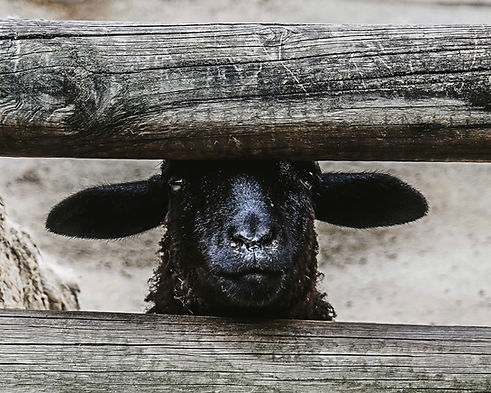
The Black Sheep is probably the most recognized of the family roles. When people say they are The Black Sheep in their family, they often mean they perceived themselves different than the rest of the family in negative ways, and are often blamed for issues that come up in the family. As The Identified Problem becomes a lightning rod for displaced anxiety, The Black Sheep is the lightning rod for anger, blame and disapproval.
In dysfunctional families other members may adopt the negative perspective on The Black Sheep sheerly by the way others react to them without questioning. Depending on how severe the dysfunction, others may engage in the blaming behavior out of fear for their own more positive role and may build bonds between others in the family by joining in the negativity.
Just as The Golden Child is singled out for praise and indulgence, The Black Sheep is singled out for blame and punishment. If all of the children make a mistake, The Black Sheep receives the harshest response and punishment. As mentioned, the egocentricity of children creates a sense of helplessness in The Black Sheep. The sense of fairness is violated by the disparity in blame and punishment, causing The Black Sheep to feel very alone in the world, misunderstood, and rejected from the family.
For The Black Sheep, they often internalize the role, damaging their self esteem profoundly and creating a deep sense of anger and resentment towards others in the family who hold a more accepted role. They come to view themselves as "bad" "unworthy" "stupid" or "a loser." A success on the part of The Black Sheep is minimized, dismissed or undercut with "lucky accident" rather than praise of effort or ability.
The Black Sheep struggles to have positive relationships with family members which can translate into a desire to leave the home and distance themselves from family, often at an early age. The anger they carry can cause problems in school, social relationships, employment and more. With an undermined sense of self, The Black Sheep can react by completely rejecting the family's values, beliefs and lifestyle by becoming the opposite as they individuate from the family.
Alone in the world, carrying a low self esteem and anger, in best cases The Black Sheep is resilient and marches to their own drum. If no one ever believed in The Black Sheep they can become fiercely independent while also deeply craving praise, appreciation and acknowledgement. If they can get a toe hold on success, they can achieve great things and build an independent positive self esteem. Black Sheep can become creative forces in and of themselves, having an ability to take risks because there was no completely safe path early in life, everything is on the table for them.
But more often, this sense of rejection that begins early in life creates vulnerability to a wide range of dysfunction, substance abuse, toxic and abusive relationships, difficulty in advanced education and struggles with job and life satisfaction.
The alienation often continues into adulthood. Family members expect negative outcomes, and doubt The Black Sheep's ability to change or succeed however this can be rewritten. If The Black Sheep makes significant positive changes in their lives, roles can begin to shift later in life, and, much to the dismay of other family members, The Black Sheep role can be transferred to another person who previously received praise or at least managed to fade into the background.
When a family is used to someone being on the outs, sudden acceptance of that previous target requires someone else to shoulder the burden. The person next in line now has role confusion, and an inability to cope with their reassignment because the dynamic is completely new.
The Black Sheep may dive deep into a reactionary persona, or strive to be accepted by the world with urgency. It can take years to develop the internal validation they so desperately crave or forge relationships that can take the place of the nurturing they were denied in early life. They often remain isolated from the family although The Lost Children and The Enabler may have covert connections with The Black Sheep, the love and approval they are denied by the rest of the family.
The Black Sheep can assume the rest of the world is deeply unfair, making new relationships difficult. Intimacy can be uncomfortable, as The Black Sheep may have a deep sense of unworthiness; they wait for the rejection which can often become a self fulfilling prophecy, further cementing The Black Sheep's view they don't fit into the world and are undeserving of love.
Conclusion
You may have insights and thoughts in response to consideration roles, perhaps your family of origin and the family you have formed as an adult. Sometimes it's helpful to use guidance in applying these concepts to lived experience, so I have provided a download for exploration. I encourage you to share it with me in your sessions.